

The morning of August 14, 2005 became a date that marked the world of aviation. That day, an event cataloged by many as “the ghost flight” took place.
Shortly after taking off from Larnaca International Airport in Cyprus, all 115 passengers and 5 crew members on Flight 522 collapsed from lack of oxygen in the cabin. 120 people on board a plane that apparently flew without problems, it looks like something out of a horror movie.
What was it that caused one of the greatest air disasters of the 21st century?
It was the summer season in Europe, a time where all the airlines take advantage to cover the high demand for the holiday season. Helios airline with 7 years of service was one of many. A small fleet of three planes operated around Europe, taking advantage of the vacation market and the local economy by transporting tourists at an economic cost.
In the early hours of August 14, 2005, the Helios Boeing 737 lands at Larnaca airport in Cyprus from London, where the pilots are given the task of notifying maintenance that a door had frozen during the flight, as well as reports of some abnormal noises coming from the rear left door.
While the pilots rested, the maintenance team took on the task of checking the plane and fixing any problems that arose. In the end it was nothing serious that couldn’t be fixed with some routine checks. The plane would be ready to fly at dawn.
One of the rudimentary maintenance tests is to check the pressurization. One of the main steps is to change the pressurization panel setting from automatic to manual in the cabin. This seemingly insignificant step was crucial to the events of the day.
To fully understand what happened, we need to take an express class on the pressurization and air conditioning systems of an airplane.
It is well known that humans cannot breathe the outside air of a plane in mid-flight, so it must be pressurized. The air from outside that enters the plane is pressurized so that passengers can breathe, and then returns to the outside.
A part of what enters is taken to the air conditioning, where it is compressed and heated to be distributed throughout the cabin. Although an airplane flies most of the time above 10,000 meters, its interior is pressurized at an altitude of no more than 2500, where you can breathe.
On the Boeing 737, and many other aircraft, the system can automatically adjust based on circumstances. But for everything to work normally, the pressure panel has to be on automatic. Dawn arrives and the crew is ready to board, this time they have to fly to Prague and the Czech Republic, making a brief stopover in Athens.
Captain Hans-Jürgen Merten was a German pilot who was hired by Helios during the busy summer season to fly these vacation flights. At that time he had more than 35 years of experience. His first officer, Pampos Charalambous, was another experienced crew member, whith 51 years old. Captains must follow a checklist for each stage of the flight, but on this particular flight, they didn’t realize the position of the pressurization switch, so when the plane takes off for Athens the cabin is not pressurized.
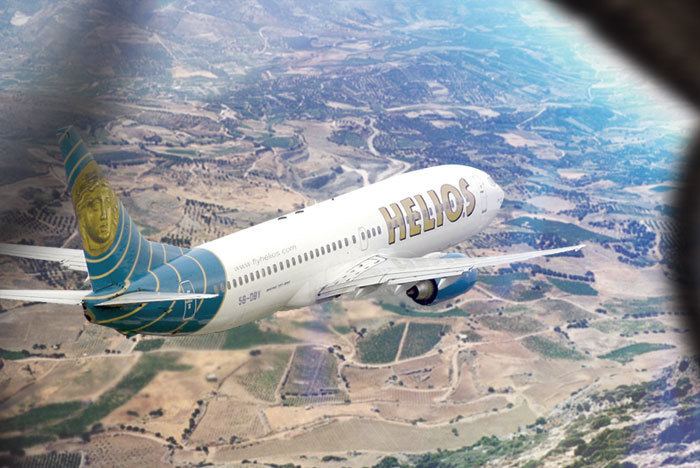
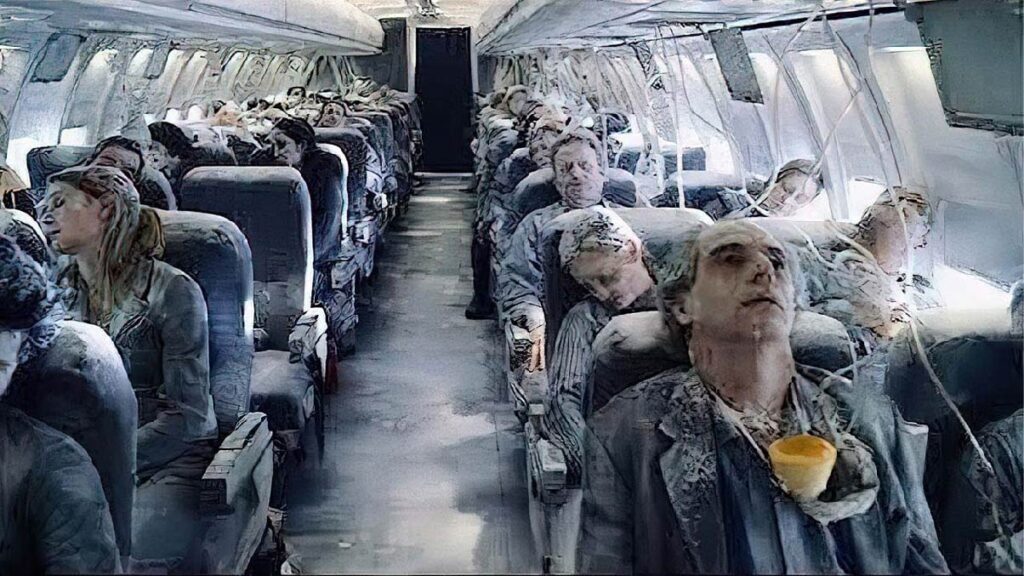
Five minutes later the alarm sounds, but is misunderstood. Meanwhile, as the flight passes 12,000 feet, thin air causes oxygen masks to fall from the ceiling, signaling that something is seriously wrong. Let’s remember that the masks are an emergency resource so each passenger only has oxygen for a few minutes, and when this happens, the pilots have to request an emergency descent to a safe altitude, but this flight for some strange reason did not make the request.
A few minuters later everyone on the flight begins to feel nauseous and dizzy, which are the first signs of Hypoxia, thus explaining the reason for the absence of the pilots.
Hypoxia occurs when there is a lack of oxygenated blood to the brain and other vital organs, making it an extremely dangerous condition. As a result of the situation, the senses and consciousness of the crew members were seriously affected, they ended up confused and did not think clearly.
The worst thing about this is that you do not realize when it happens. Flight 737 climbed to an altitude of 10,000 meters, just as programmed on the autopilot.
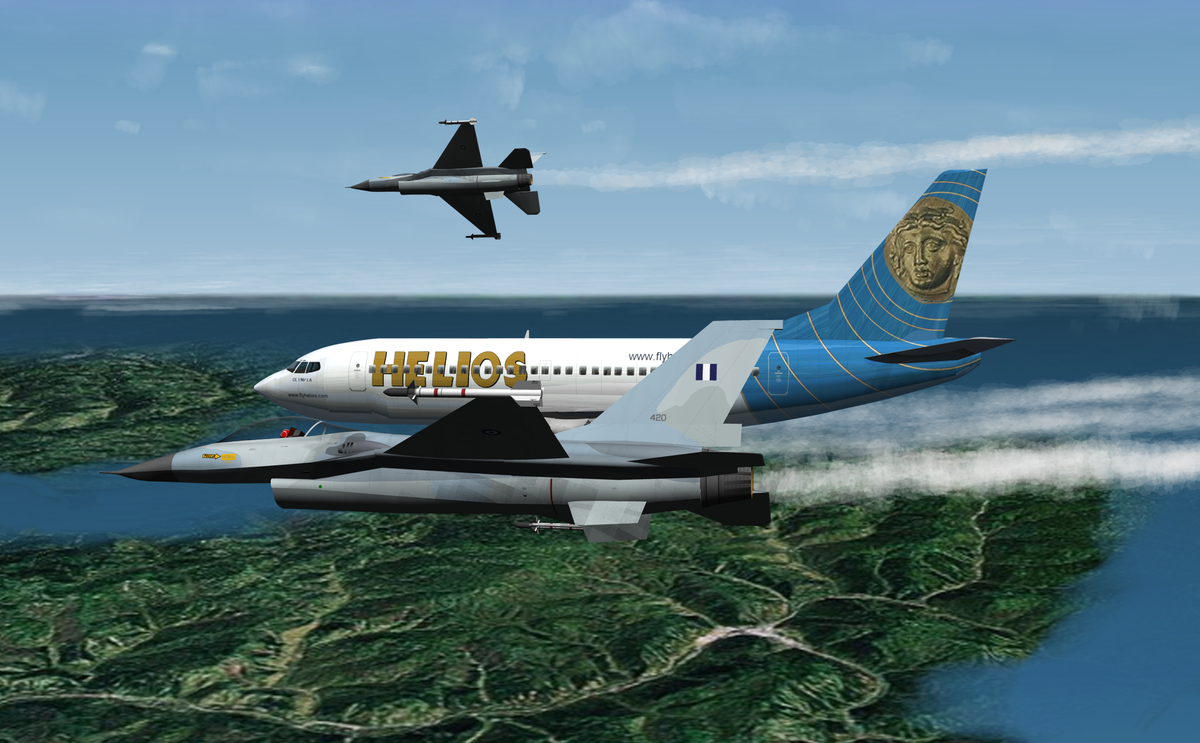
Before takeoff, pilots program everything from route, altitude and performance data into computers, so the plane stayed on schedule: fly to Athens. Although it had no pilots. Once the end of the route is reached, the plane begins to circle around its last navigation point and for 40 minutes air traffic control tries to contact the flight without success. That’s when the air force is notified about the case and sends two F-16 fighter jets to intercept them and when they look inside the cockpit, they see the two pilots sitting apparently dead.
If the plane keeps circling, it will eventually run out of fuel. Suddenly, the F-16 pilots see a man enter the cockpit, at last, if there was anyone conscious on board.
It was Andres Prodromou, the flight attendant. It is believed that he survived until then because he used the extra oxygen cylinders.
He had a pilot’s license and was probably aware of the situation. But unfortunately he had never commanded a Boeing 737, and even with the cylinders his senses were not 100%.
Despite his attempts, he was unable to use the radios to communicate. After a while, he fails the left engine due to lack of fuel, then… the right.
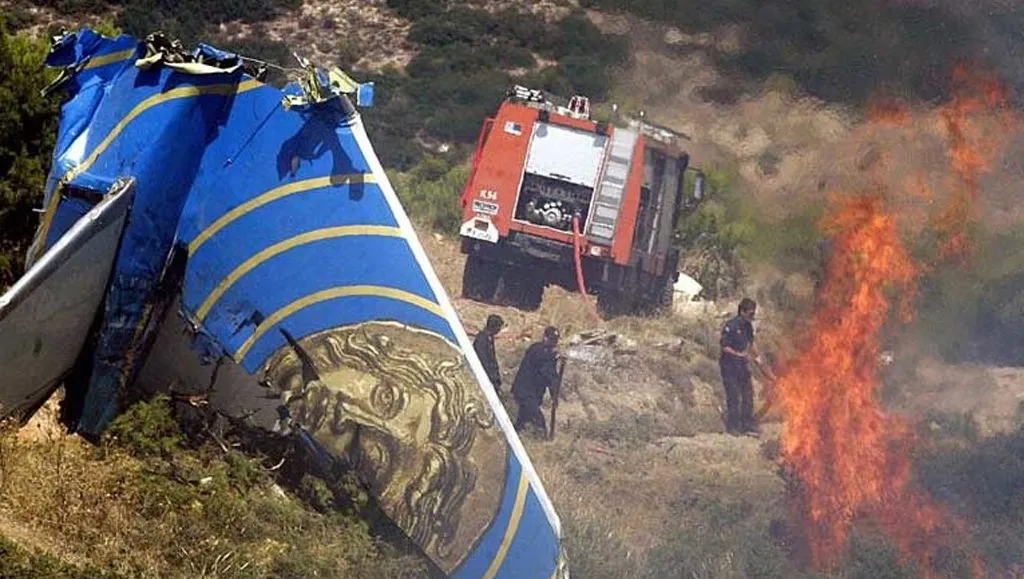
The autopilot disengages and the plane slowly begins to descend. Although the attendant had no knowledge to land, he managed to get the plane to a rural area of Greece, avoiding an even greater tragedy. A few minutes later, the plane crashes into a hill about 40 kilometers from the Greek capital. All 121 people on board the plane were killed.
After the accident, the United States Federal Aviation Administration required all Boeing 737s to be equipped with two additional warning lights in the cabin, indicating problems with pressurization before hypoxia occurs. In addition, the European Union has called for more stringent inspections and changes to a number of maintenance procedures, as well as an end to the entry of unsafe airlines.